
Improved health with nature connection
- by Jules Horner
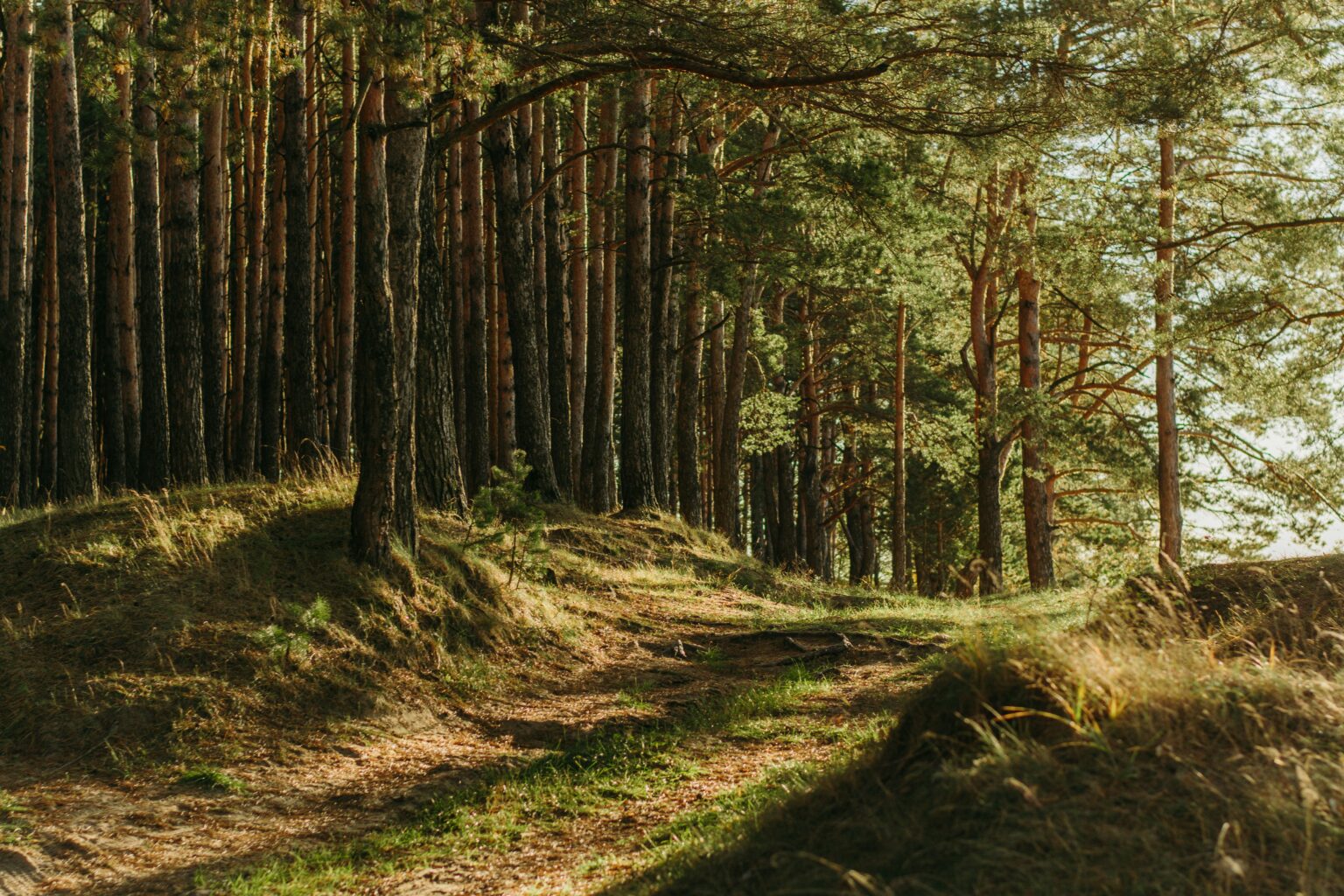
Shinrin yoku (SY), the ancient Japanese art of forest bathing, surfaced in the 1980s as a health care measure, in response to the effects of large-scale urbanization on the physiological, and psychological health of city dwellers in Japan and China (Hansen, et al. 2017). Since then there has been growing interest in the potential health benefits of forest bathing with research being conducted in the areas of Environmental health and preventive medicine, Mental health, Complementary healthcare, and Sustainability. Research methods are a combination of systematic review, meta analysis, and field experiments, with quantitative and qualitative data to be gleaned.
The benefits of SY are measured in field studies by control groups who are placed into an urban, and then forest environment, to contrast and compare the effects these environments have on wellbeing. Measures such as salivary cortisol, blood pressure and profile of mood states (POMS) questionnaire are taken before and after exposure to the environments (Park et, al. 2009).
Research findings had a theme of reported health benefits across data collected. In comparison to the negative effects of an urban environment that raised cortisol, blood pressure, anxiety and depression, SY markedly improved immune function, increasing natural killer cells, which may have indication in Cancer prevention; Cardiovascular function, lowering blood pressure; Respiratory function, allergies; Nervous system relaxation, reducing anxiety and depression, as well as neurodivergent disorders (Yoku, et al. 2009). Therefore SY indicates a positive effect on mental and physical wellbeing, regulating immunity, and reducing the expression of diseases such as hypertension, chronic obstructive pulmonary disease, heart failure and stroke (Wen, et al. 2019).
However in order to report such benefits certain criteria are followed to elicit uniform results, such as no use of technology, prohibition of recreational drugs, alcohol and coffee, control of accommodation and diet (Wen, et al. 2019).
This method describes what is possible under a controlled therapeutic approach which could be indicated as a prescribed therapy, i.e a doctor may prescribe SY under facilitation by a guide to improve mental health (Heart, J. 2016)
Taking a wider view under the lense of SY we can see that research is not limited to Japan. In Europe and the USA terms such as forest bathing and forest recreation are used to describe any therapeutic time spent in nature. Data here elicits similar results in physiological and psychological wellbeing, and incorporates the characteristics of the forest environment, such as tree species and density (Grill & Satchelli 2020).
Ultimately studies show a quantifiable health benefit for spending time in nature with a minimum of 30 minutes exposure, immersed or viewed from a window able to reduce anxiety and blood pressure (Hansan, et al. 2017). Individuals who spend > 120 minutes a week in nature report greater health and wellbeing than those who had no exposure (White, et. al. 2019).
Here we venture into the realm of nature based mindfulness practice. It incorporates Kaplan’s attention restoration theory (ART), exploring the interactions between mindfulness as a form of attention restoration, and the natural environment, which supports the restorative process. The theory suggests that concentration and memory can be improved by spending time in nature, and that mindfulness can become more effortlessly accomplished by the untrained meditator when removed from everyday life (Ohly, et al. 2016).
In one systematic review and meta analysis on nature based mindfulness, three interventions are discussed.
- Short single instruction which was self guided mindfulness.
- Weekly meetings with gardening activities and psychotherapy.
- Residential wilderness therapy lasting several weeks.
This shows how nature mindfulness therapy can incorporate a broad range of activities and environments to suit individual preference. All included interventions practiced informal mindfulness (IM) where attention is guided to everyday activities or formal mindfulness (FM) as a form of meditation. Results showed that IM elicited a greater impact on wellbeing due to compatibility with everyday activities such as walking, and gardening (Djernis, et al. 2019).
The human species has spent 99.99% of our time on Earth in nature and not in urban environments (Kotera, et al. 2022). This suggests that although we have seemingly ‘adapted’ to live in urbanized environments, our biology tells a different story. We are genetically predisposed to love nature as we are from nature, we have learned to survive and adapt in nature for most of our lives, and the ancestors before us. We have an innate connection and interaction with nature that is consistent (Quing Li. 2018). This is the basis of the Biophilia Hypothesis, and it encompasses a fundamental truth, that nature provides a measurable benefit to health and wellbeing to those who experience it (Gaekwad, et al. 2022).
Our exposure to man-made environments, and attention to technology is growing, along with mental health disorders, and morbidities in urban populations compared with rural populus (Schiebel, et al. 2022). This disparity reflects the need for research in the areas of forest bathing, and nature based therapies, and demonstrates that access to nature is essential for health and wellbeing.
In practice, herbalists take a holistic approach to address patients who present in clinics, with a variety of health concerns. Generally these concerns are multifactorial and require guidance on diet and lifestyle in addition to prescriptions given. Therefore nature based therapies provide a valuable resource to the practitioner and offer the patient, low or no cost, health benefits, that can be engaged with in a multitude of accessible ways. The benefits of nature therapy can be seen as threefold, by:
- Improving the service of the practitioner.
- Improving the health of the patient.
- Improving the state of the planet.
Research suggests that human impact on the environment is rapidly transforming the earth’s natural ecosystems, this impact directly negatively affects human health (Myers, et al. 2013). Equally, by engaging with nature based therapy, and realizing the benefits to health, we consciously connect with the environment and become more aware of our impact on it.
Anithakumari D, S. Gayathri, G. Ramya. (2019). Effect of Technology in Sedentary Lifestyle and its Impact on the Overall Well Being of the IT Employees in Chennai. International journal of technology and engineering. Online: https://www.researchgate.net/profile/Gayathri-Sivasubramanian/publication/33590995Dorthe Djernis, Inger Lerstrup, Dorthe Poulsen, Ulrika Stigsdotter, Jesper Dahlgaard, Mia O’Toole. (2019). A Systematic Review and Meta-Analysis of Nature-Based Mindfulness: Effects of Moving Mindfulness Training into an Outdoor Natural Setting. MDPI. Online: https://www.mdpi.com/1660-4601/16/17/3202.Gov.uk. (2022). Employment by occupation. Online: https://www.ethnicity-facts-figures.service.gov.uk/work-pay-and-benefits/employment/employment-by-occupation/latest/Grilli Gianluca, Sandro Sacchelli. (2020). Health Benefits Derived from Forest: A Review. MDPI. Online: https://www.mdpi.com/1660-4601/17/17/6125Hansen Margaret, Reo Jones, Kirsten Tocchini. (2017). Shinrin-Yoku (Forest Bathing) and Nature Therapy: A State-of-the-Art Review. MDPI. Online: https://www.mdpi.com/1660-4601/14/8/851Heart, J. (2016). Prescribing nature therapy for improved mental health. Alternative and complementary therapies. Online: https://www.liebertpub.com/doi/full/10.1089/act.2016.29067.jhaMyers Samuel S, Lynne Gaffikinc, Christopher D. Golden b, Richard S. Ostfeldd, Kent H.Redforde, Taylor H. Ricketts, Will R. Turner, Steven A. Osofsky. (2013). Human health impacts of ecosystem alteration. PNAS. Online: https://www.pnas.org/doi/epdf/10.1073/pnas.1218656110Ohlya Heather, Mathew P. Whitea, Benedict W. Wheelera, Alison Bethelb, Obioha C. Ukoumunneb,Vasilis Nikolaoub, and Ruth Garside. Attention Restoration Theory: A Systematic Review of the Attention RestorationPotential of Exposure to Natural Environments. Taylor & Francis. Online: https://www.researchgate.net/publication/308664082_Attention_Restoration_Theory_A_Systematic_Review_of_the_Attention_Restoration_Potential_of_Exposure_to_Natural_EnvironmentsPark Bum Jin, Yuko Tsunetsugu, Tamami Kasetani, Takahide Kagawa & Yoshifumi Miyazaki. (2009). The physiological effects of Shinrin-yoku (taking in the forest atmosphere or forest bathing): evidence from field experiments in 24 forests across Japan. Springer link. Online: https://link.springer.com/article/10.1007/s12199-009-0086-9Quing, Li. Dr. (2018). Shinrin-Yoku: The Art and Science of Forest Bathing. Penguin books UK. Online: https://books.google.co.uk/books?White Mathew P, Ian Alcock, James Grellier, Benedict W. Wheeler, Terry Hartig, Sara L. Warber, Angie Bone, Michael H. Depledge & Lora E. Fleming. (2019). Spending at least 120 minutes a week in nature is associated with good health and wellbeing. Scientific reports. Online: https://www.nature.com/articles/s41598%20019%2044097%203Yasuhiro Kotera, Miles Richardson, David Sheffield. (2022). Effects of Shinrin-Yoku (Forest Bathing) and Nature Therapy on Mental Health: a Systematic Review and Meta-analysis. Springer Link. Online: https://link.springer.com/article/10.1007/s11469-020-00363-4Ye Wen, Qi Yan, Yangliu Pan, Xinren Gu & Yuanqiu Liu. (2019). Medical empirical research on forest bathing (Shinrin-yoku): a systematic review. BMC. Online: https://environhealthprevmed.biomedcentral.com/articles/10.1186/s12199-019-0822-8Yuko Tsunetsugu, Bum-Jin Park & Yoshifumi Miyazaki. (2009). Trends in research related to “Shinrin-yoku” (taking in the forest atmosphere or forest bathing) in Japan. BMC. Online: https://environhealthprevmed.biomedcentral.com/articles/10.1007/s12199-009-0091-z

Jules Horner
For the last 15 years I have been fascinated by ancient holistic traditions and natural health practices as a way of restoring body, mind and spirit.